The Dark House Press Home

Category

Literary Essays

15 articles

Misspelled on Purpose: The Radical Grammar of Literary Defiance

Misspelled on Purpose: The Radical Grammar of Literary Defiance

A growing cohort of American writers is weaponizing the typo, embedding deliberate errors into published work as acts of resistance against the gatekeeping machinery of standardized language. These intentional ruptures are not carelessness — they are manifestos written in broken letters, challenging who gets to decide what correct writing looks like and whose voice is permitted to survive the editorial process.
The Literature They Couldn't Bury: America's Censored Books and the Communities That Carry Them

The Literature They Couldn't Bury: America's Censored Books and the Communities That Carry Them

Banned books do not disappear — they migrate, finding shelter in the networks of independent presses, underground distributors, and quietly defiant librarians who understand that suppressed literature is still literature. This investigation traces the living underground through which America's censored works continue to circulate, and asks why restriction has always, paradoxically, been among the most powerful forces for literary endurance.

The Novel That Will Not End: American Fiction's New Architecture of Refusal

The Novel That Will Not End: American Fiction's New Architecture of Refusal

A distinct strain of American experimental fiction has abandoned the promise of closure entirely, engineering texts that loop, collapse inward, or actively antagonize the reader seeking resolution. These are not merely open-ended novels — they are structural provocations, built to refuse the comfort of completion and to implicate the reader in the very anxiety they came to escape.

Punctuation as Dread: The Grammar of Terror in American Fiction's New Avant-Garde

Punctuation as Dread: The Grammar of Terror in American Fiction's New Avant-Garde

In the hands of America's most unsettling contemporary writers, a misplaced em dash or a sentence that simply refuses to end can induce more dread than any monster lurking in the dark. This essay examines how punctuation has become a primary instrument of psychological horror, arguing that the disintegration of legible syntax mirrors—and enacts—the disintegration of a coherent world.

Form as Wound: How American Writers Are Breaking Language to Tell the Truth

Form as Wound: How American Writers Are Breaking Language to Tell the Truth

When experience exceeds the capacity of conventional narrative, some American writers have chosen not to simplify the telling but to fracture the form itself. This essay examines how trauma is reshaping the architecture of American literature from the inside out, demanding new structures because the old ones were never built to hold such weight.

The Wound That Never Closes: Incompleteness as Artistic Intention in American Literature

The Wound That Never Closes: Incompleteness as Artistic Intention in American Literature

Some of the most powerful works in the American literary canon were never finished—and not by accident. From Melville's final prose to the fractured notebooks of contemporary experimentalists, deliberate incompleteness has emerged as one of literature's most unsettling and sophisticated gestures, forcing readers into the uncomfortable position of completing what the author chose to abandon.

Low Signals, Dark Frequencies: How American Pulp Is Reclaiming the Literary Underground

Low Signals, Dark Frequencies: How American Pulp Is Reclaiming the Literary Underground

Beneath the gleaming surfaces of prestige literary culture, something rawer and more urgent has been building. Contemporary American pulp—noir, splatterpunk, cyberpunk, and the forms that defy naming—has shed its disreputable skin and emerged as one of the most politically charged and aesthetically vital movements in independent publishing today. The gutter, it turns out, has excellent sightlines.

Buried Alive: The American Literary Masterworks That History Chose to Forget

Buried Alive: The American Literary Masterworks That History Chose to Forget

The American literary canon is less a record of excellence than a record of power—a carefully maintained archive that reflects whose suffering was deemed worthy of preservation and whose was quietly interred. Across the country, a handful of independent presses are exhuming the neglected and the silenced, returning to print the works that the gatekeepers of taste once decided we did not need to read.

The Phantom Author: Artificial Intelligence and the Slow Erasure of the Literary Self

The Phantom Author: Artificial Intelligence and the Slow Erasure of the Literary Self

Language models now generate prose that passes unremarked through editorial inboxes, and the question haunting independent literary culture is no longer whether machines can write—it is whether we have already forgotten what writing was for. The Dark House Press examines what is lost when authorship becomes a function rather than a wound.

Thresholds of Terror: How American Horror Fiction Has Turned the Home Against Us

Thresholds of Terror: How American Horror Fiction Has Turned the Home Against Us

The American home has long been sold as sanctuary—a fortress against the chaos of the wider world. Contemporary horror fiction has spent decades systematically dismantling that promise, exposing the walls we build around ourselves as the very instruments of our undoing. From suburban cul-de-sacs to generational farmhouses, the literature of dread has made the domestic interior its most potent and devastating battlefield.

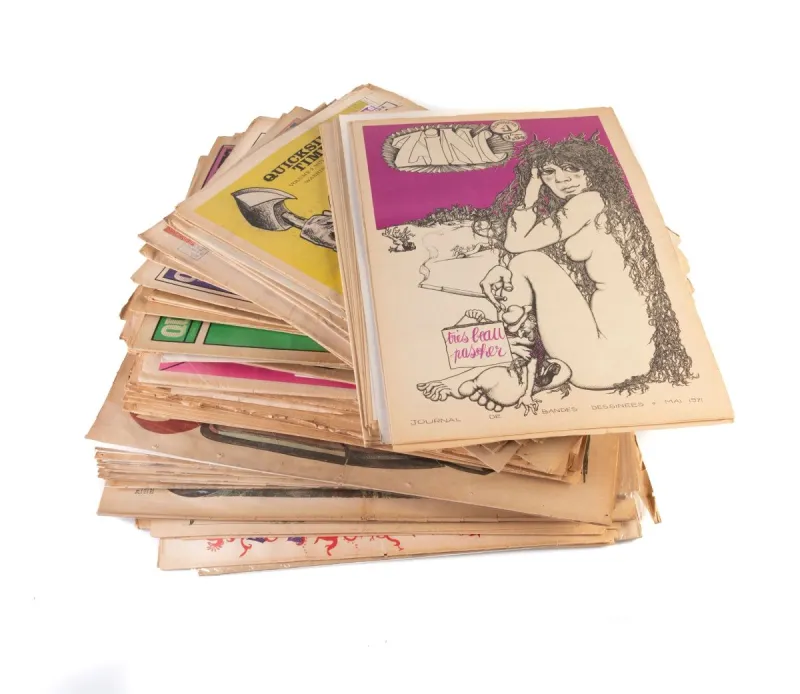
Ink in the Margins: The Renegade Literary Journals Refusing to Wait for Permission

Ink in the Margins: The Renegade Literary Journals Refusing to Wait for Permission

Somewhere in a rented studio in Baltimore, a poet is hand-stapling the forty-seventh issue of a journal that no algorithm will ever recommend and no chain bookstore will ever stock. She is not discouraged. She is, in fact, precisely where she intends to be. The underground literary press in America has never been a fallback position—it has always been a vocation, a resistance, and a form of faith.

The Confessional Mirror: How American Autofiction Is Rewriting the Self as Literature

The Confessional Mirror: How American Autofiction Is Rewriting the Self as Literature

A new generation of American writers is dissolving the membrane between lived experience and invented narrative, producing works that unsettle, implicate, and seduce in equal measure. Autofiction — long regarded as a European preoccupation — has taken root in the American literary underground with a ferocity that mainstream publishing is only beginning to reckon with. At The Dark House Press, we examine why this genre of radical self-exposure has become one of the most urgent literary movements